MUSEUM 4

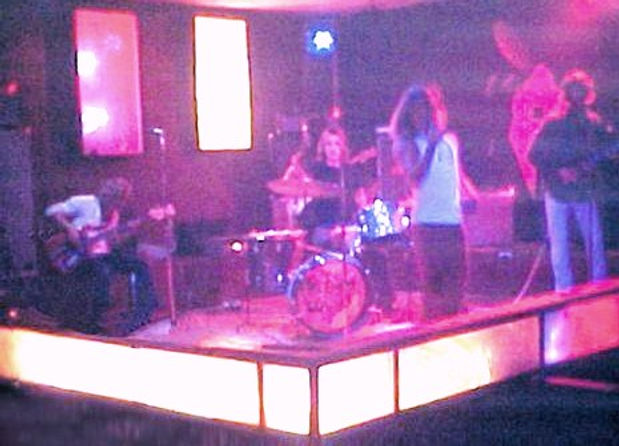
Late in 1969, 5 musicians, L J Fortier (drums), Ray Escott (lead vocals, percussion), John Harrow (lead guitar, vocals), Kurt Sunderman (rhythm guitar, vocals), and Buster McCarthy (bass guitar, vocals), gathered on Sunday mornings in the damp basement of a century old house on Bazetta Road, midway between Warren and Cortland, Ohio, in an effort to further pursue their dreams of being in a successful rock band.
Within a year, with the ongoing support of a special network of friends and associates, the group's popularity peaked locally with their winning a "battle of the bands" and recording two songs for a 45 that was released with the "Starshine Productions" label, which was played on local radio and jukeboxes.
The two songs were a heavy version of Merle Travis's "16 Tons" (perhaps best known as by Ernie Ford), and "Singing My Own Song", written by L J and Buster.
Their regular performances at the Zodiac Club in Vienna, Ohio, helped build the establishment into a happening night spot, as they eventually drew as many people as could fit into the place. The band's original, lengthy, evening-ending jam (known as "The Boogie"), generated some exceptionally enthusiastic responses from an audience that enjoyed the special opportunity to cavort and engage in a bit of good-natured revelry with the group on the weekend.
The band performed a number of original tunes along with their often innovative versions of songs by well known artists.
As Freeman Sound packed them in by the hundreds at the club, fire officials and other local authorities became concerned about the capacity crowds and limited parking accomodations.
The party continued, however, and in appreciation, a larger than life mural of the group was even painted on a wall of the club.
There was a special sense of unity between the band and their fans. They were a "people's group", part of the generation of Woodstock-boomers who had experienced the emergence of the Beatles and the psychedelic '60s.
They understood the "high endeavor" of questioning the motivations of an "establishment" that seemed more concerned with control of the masses and profits than abolishing social injustices, which seemed possible, if people could only exercise honesty and compassion in their dealings within the context of what most common folk had come to understand as being the "American Dream".
They could relate to what it was to be a "social underdog" and not being considered "acceptable" because of how one looked or thought.
Things like having survived a rock festival and experiencing fantastic, substance-induced ideas and impressions also created a sense of common ground and even "brotherhood" among many.
There was a shared sense that music was a good medium through which the potentials of love and understanding could be communicated on higher levels of consciousness.
Freeman Sound did their best to accomplish that, as they expressed their enthusiastic spirit in performances that usually included a variety of wildly dynamic musical improvisations.
As 1970 drew to a close, violence at rock concerts, the split of the audience between AM and FM radio, the events at Kent State University and even the breakup of the Beatles seemed to signal the "end of an age".
At the height of their local popularity, Freeman Sound bandmembers found themselves at a point in time where issues such as having to earn a living and / or furthering education were having an increasing impact on their lives.
The band wasn't making much money, and only rarely did they perform anywhere but the Zodiac Club.
Various personal situational scenarios and breakdowns of avenues of communication within the group (as well as between the group and those involved with the band's management), eventually resulted in differences of opinions about how to best deal with ongoing circumstances and, finally, the disbanding of Freeman Sound.
Most who knew of the band shared the sentiment that if Freeman Sound had stayed together, they could have achieved increasingly higher levels of success.
Sadly, they never made it back into the studio to do any more recording, and not much in the way of live performances were captured on tape, otherwise.
Nomatter what may have become of it all, Freeman Sound's rise to local popularity remains a special memory for those who experienced and were personally involved in the whole "scene". They were highly regarded for their attempts to interpret the spirit of the era and the often chaotic signs of the times with a special energetic sincerety.


Their high regard for a sense of unity within their generation and amongst their peers made the breakup of the band an especially difficult thing for many to understand.
Many even recognized it as a type of personal tragedy, as a special hope for some exceptional things coming to pass as the result of the band becoming increasingly more widely regarded was suddenly gone.
Today, Freeman Sound's 45 has been heard in the U.S. from coast to coast and around the world. The records produced with the Starshine label are highly valued by collectors, not only because Freeman Sound is considered a "Holy Grail" of NE Ohio rock band history, but because they also feature other artists such as Morly Grey and guitarist Jim Gustafson of "Poobah" fame who was, during that era, with the band "Biggy Rat".
L J is currently offering CDs which feature his own mix of the Freeman Sound 45 and other recordings by the original Freeman Sound members, all together and in various combinations. See the "CDs" page.
There are some studio and live recordings that captured much of the talent and charisma that made Freeman Sound the band it was.
The "dream" is alive. Truth can be known.
See the video of Freeman Sound at the Zodiac Club with a live track version of "The Boogie" on the Video 1 page.